
Forging a Sustainable Future: SIPA Project Charts a New Business Model for RDF in Banyumas
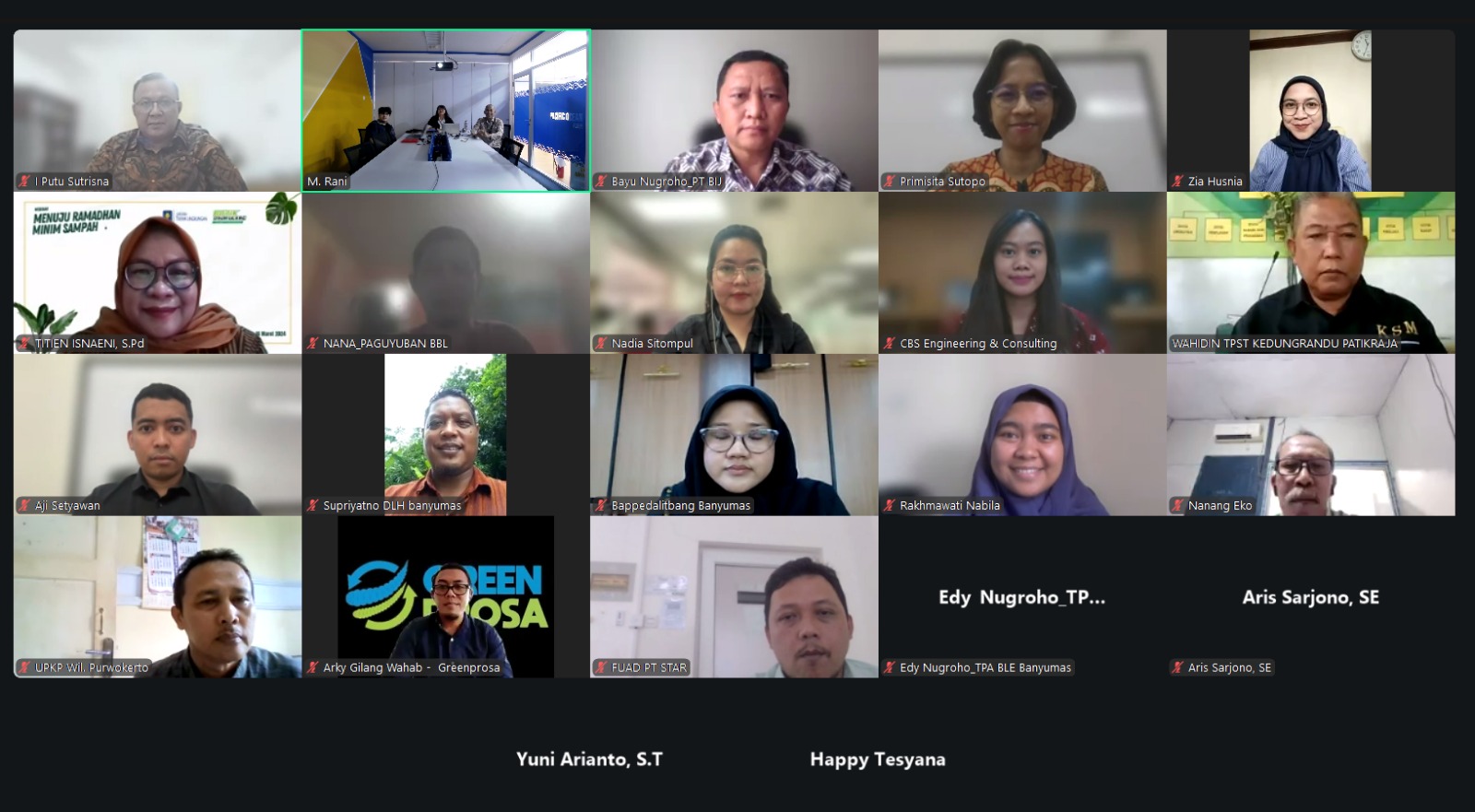
Jakarta/Zoom Meeting (Hybrid), 13 November 2025 — On a bright morning, government officials, community leaders, development partners, and technical experts connected virtually, gathering with a shared sense of purpose: to explore how the nation can build a sustainable, inclusive, and economically viable waste-to-energy ecosystem. Although held online, the discussion was lively and collaborative, reflecting the strong commitment of many stakeholders to strengthening innovative waste management solutions. The consultation, hosted by the Sustainable Infrastructure Program in Asia (SIPA)—a collaboration between The Ministry of National Development Planning/Bappenas and UNDP Indonesia—focused on mapping a viable Refuse-Derived Fuel (RDF) business model for Banyumas Regency, one of the country’s leading examples of community-based waste management.
The virtual session was facilitated by consultants from PT Cagar Bentara Sakti (CBS), who presented the findings of a comprehensive assessment and contextualized Banyumas’s unique position as a national pioneer. The region’s model has attracted wide interest from central government ministries and development partners, both for its community participation and for its potential to shape Indonesia’s circular economy transition.
Banyumas has long been recognized for its decentralized approach, anchored in the active role of Kelompok Swadaya Masyarakat (KSM), or Community Self-Help Groups. These groups carry out waste sorting and processing at the source, an approach often described as an “in-kind contribution.” Their collective efforts significantly reduce the burden on the regency’s main waste processing facility, Landfill (Tempat Pengolahan Akhir/ TPA) Berwawasan Lingkungan dan Edukasi (BLE), ensuring that waste systems run more efficiently and in a more distributed manner compared to many other regions.
However, the virtual meeting also provided space for candid reflections from local KSM members. Representatives from a waste treatment facility (Tempat Pengolahan Sampah Terpadu/ TPST) Kedungrandu Patikraja explained that despite their commitment and community spirit, producing RDF still functions as a financial “cost center.” Current revenues do not cover operational needs, meaning that operators continue their work largely out of personal conviction and environmental idealism rather than financial gain. Their perspective underscored the importance of developing a more sustainable and equitable financial structure that supports the work of upstream community actors.
During the session, the expert team presented the findings of its RDF business model study, which highlighted both the operational realities and the untapped potential of TPA BLE. The analysis found that the RDF produced at the facility sometimes falls short of industry specifications, limiting its market value and resulting in a low selling price of around Rp 67,500 per ton. This shortfall contributes to a substantial financial gap and makes long-term operation reliant on continued support from the local government.
To address this challenge, the study outlined a practical and realistic improvement scenario. Enhancing the facility’s technical capacity—particularly in the areas of thermal drying, sorting efficiency, and material quality—would significantly raise the value of the final product. With equipment upgrades such as a rotary dryer and improved material-handling tools, TPA BLE could produce RDF that meets regional quality benchmarks. Once this threshold is achieved, the selling price could rise to approximately Rp 450,000 per ton. Under these conditions, the facility could reach a projected Internal Rate of Return of around 14 percent, moving closer to financial self-sufficiency.
Beyond technical improvements, the virtual discussion emphasized the importance of strengthening institutional arrangements. Many participants highlighted the need for Banyumas’s waste management unit to transition from a traditional Local Technical Implementation Unit (Unit Pelaksana Teknis Daerah/ UPTD) structure to a Regional Public Service Agency (Badan Layanan Umum Daerah/ BLUD). Such a shift would grant greater financial flexibility, allowing the facility to manage revenues independently, engage in long-term agreements with industrial off-takers, and adopt a more performance-oriented operational model.
Another key theme to emerge from the conversation was the need for stable and long-term off-take agreements. Reliable demand for RDF is essential to secure financial stability and encourage further investment. Participants discussed the possibility of reactivating pooling stations to consolidate materials from KSMs and improve quality control before shipment to industrial users. Strengthening source separation efforts and channeling Extended Producer Responsibility (EPR) funding to support upstream actors were also highlighted as complementary measures to ease operational burdens and enhance system efficiency.
Despite the challenges, the meeting also showcased Banyumas’s forward momentum. TPA BLE’s operator, Mr. Edi, shared recent innovations underway at the facility. The team has begun experimenting with machinery capable of processing harder-to-manage waste streams such as textiles, diapers, and rubber, converting them into RDF. Through additional investor support, the facility aims to expand its processing capacity to potentially reach 150 tons per day by early next year. The operator is also exploring the development of Solid Recovered Fuel (SRF) pellets with higher caloric value, which could open doors to new industrial applications.
As the meeting drew to a close, representatives from Bappenas and UNDP reiterated the significance of Banyumas’s experience for national policy development. The insights and recommendations from this study will inform ongoing efforts to strengthen the enabling environment for RDF across Indonesia. Key areas include the establishment of a more standardized and equitable pricing framework, as well as the development of national planning and operational guidelines that other regions can adopt when considering RDF implementation.
In his concluding remarks, UNDP Indonesia’s Energy Advisor, Mr. Aang Darmawan, expressed deep appreciation for Banyumas’s leadership and collaborative energy. He noted that the regency’s commitment to innovation and partnership provides valuable lessons for Indonesia’s broader circular economy aspirations. Efforts to develop a national RDF standard are already underway, signaling a promising future for sustainable waste management across the country.