
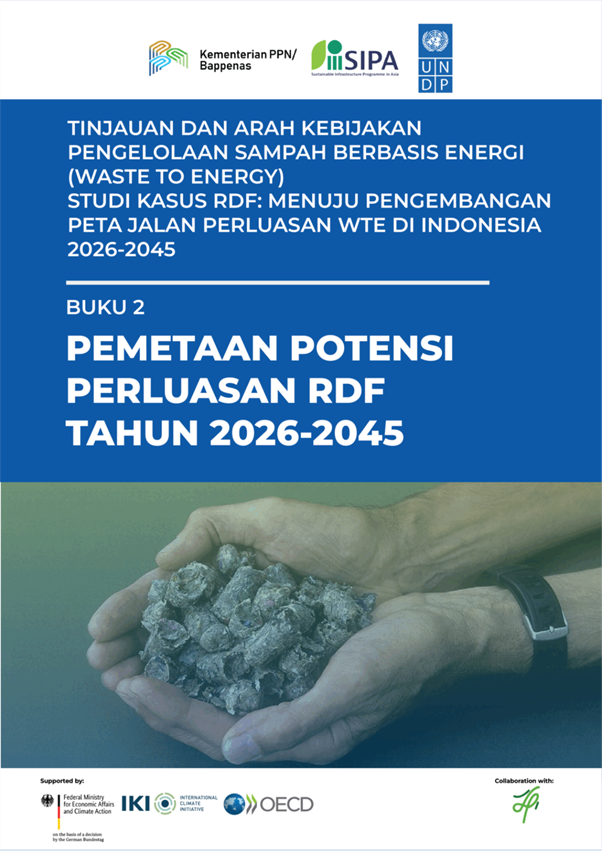
Mapping the Potential Expansion of RDF Phases 2026-2045 (Bahasa Indonesia Ver.)
The development of Refuse-Derived Fuel (RDF) in Indonesia is a crucial step toward achieving sustainable waste management while supporting the clean energy transition. Following the gap analysis on RDF implementation, this book presents a roadmap for the expansion of RDF in Indonesia through 2045.
The study provides projections of future demand, infrastructure readiness, and potential priority locations for RDF development across regions. The analysis shows that Indonesia has significant opportunities to expand RDF facilities in stages, taking into account technical, economic, social, and environmental aspects.
Key highlights of the study include:
- 2026–2030 – focus on optimizing existing RDF operations, strengthening regulations, and enhancing human resource capacity.
- 2031–2035 – development of RDF in major cities with cement industries and coal-fired power plants as the main offtakers.
- 2036–2040 – expansion of RDF to mid-sized regions with more efficient technology integration and promotion of RDF utilization diversification.
- 2041–2045 – RDF is projected to become an integral part of the national energy and waste management system, aligned with the 2060 Net Zero Emission target.
The study underscores the importance of collaboration between the central government, local governments, the private sector, and communities to ensure sustainable RDF development. Innovative financing, incentives, and strategic partnerships are identified as key enablers for realizing this roadmap.
With consistent implementation, RDF can serve as a major solution to reduce landfill burden, cut emissions, and support Indonesia’s low-carbon development agenda.
Please download the full report through the link below:
Mapping the Potential Expansion of RDF Phases 2026-2045 (Bahasa Indonesia Ver.)